

 burnessie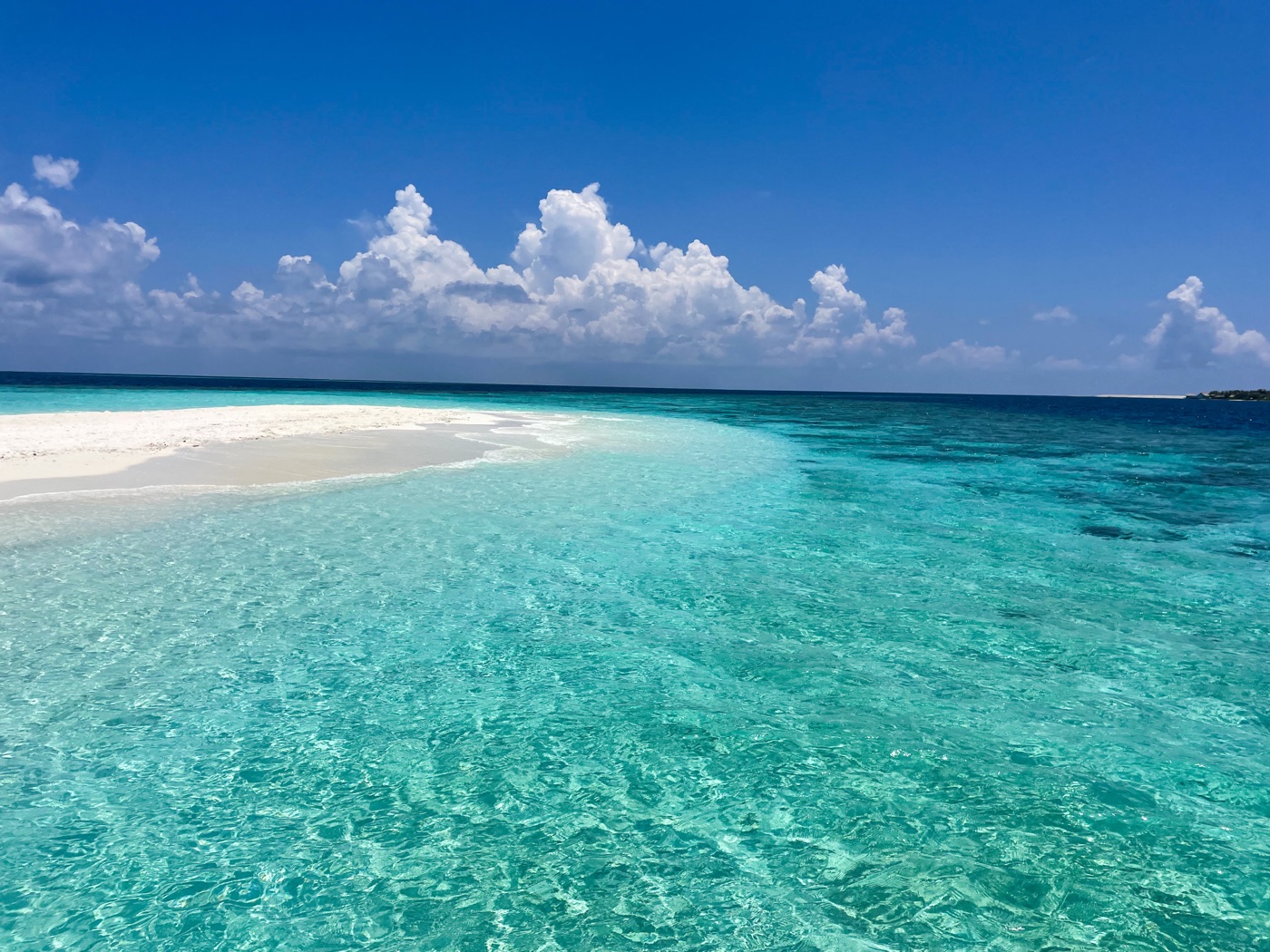
Want to experience paradise in the Maldives on a budget? Earlier this year I spent two weeks backpacking (yes, backpacking!) around some of The Maldives local islands, and naturally fell completely in love with those white sands and crystal clear waters.
Long gone are the days where the Maldives were only accessible to honeymooners with a huge luxury budget, and thank God, because those white sandy beaches and clear turquoise waters really are as incredible as they look in the photos and on the billboards.
In 2009 the Maldivian government allowed the local islands to open up for tourism in aims of improving the economy and job opportunities across the country. Gradually, small islands across the 90,000 square kilometer area in the Indian ocean that the Maldives inhabit have opened up guest houses and hotels to tourists, and now you can experience paradise on a budget, rather than at one of the luxury resorts.
This blog lists helpful travel tips to experience paradise on a budget, and tells you everything I wish I’d known before visiting the islands.
Maldives Local Islands: Need To Know Contents:
*This blog includes affiliate links. If you purchase something through one of my links, I will receive a small commission at no extra cost to you. Thank you for supporting me!*


GETTING TO AND AROUND THE MALDIVES LOCAL ISLANDS
GETTING TO THE MALDIVES
Your biggest expense for a trip around the Maldives local islands will be the flight to Male, the capital.
That said, you can book reward flights with Avios points if you’re organised for just £150 in taxes per person return, so it’s an excellent way to use your hard earnt points!
If you’re already in South Asia, there are cheap direct flights from India, and the Maldives works paritcularly well as a dual centre holiday with Sri Lanka.
GETTING TO THE LOCAL ISLANDS
You’ve got two options to get to your island of choice in the Maldives: speed boat, which can be arranged through your accommodation and added to your bill, or take the local ferry.
The local ferries are incredibly good value – the 1 hour 20 min journey to Gulhi cost me around £1 ($1.35), whereas the 30 min speedboat would have cost me £25 ($30). However, if you’re short on time you may want to throw some money at the speedboat options – they’re a lot quicker, and some of the ferry journeys are over 4 hours long. The public ferries also don’t necessarily run every day, so you may have no choice but to get a speedboat.
Please note that bad weather can also affect whether the local ferries will run. Your guest house or hotel should be able to keep you up to date with this.
GETTING AROUND THE LOCAL ISLANDS
It will be no surprise that getting around the islands themselves on foot is easy; the islands are small and many of them are no bigger than a 10-15 min walk from one end to the other.
That said, most guest houses will meet you from your ferry or speedboat with a buggy and save you walking and carrying your luggage to the accommodation, and you will see the locals using scooters!


WHEN IS THE BEST TIME OF YEAR TO VISIT THE MALDIVES?
WET AND DRY SEASON IN THE MALDIVES
The dry season in the Maldives runs from December to April, and the wet season runs between May and November – though some sources will cite April and November as more transitional months.
That said, this just means there will be less rain between December and April, not that there will be none! The climate in the Maldives is tropical, and with small islands across a 90,000km stretch of the Indian Ocean, you are going to encounter storms and rain from time to time, unless you pick a lucky week.
I travelled in April and the start of May; towards the end of my time there were a couple of overnight downpours and a bit more cloud, but I have a friend who went for a week in February and it was overcast the whole time. The tropics can’t really be trusted, and the weather forecasts aren’t really accurate given the small size of most of the local islands.
Wet season will mean better deals on accommodation, but you may find it difficult to find enough people to do the excursions, and some restaurants may be closed.
WHAT IS THE BEST TIME OF YEAR TO SEE MANTA RAYS IN THE MALDIVES?
Whilst storms and rain dull visibility for diving, and bring wind that can affect whether some of the excursions can run, the wet season is also better for sightings of manta rays due to increased plankton.
Whilst there are year round sightings on Ukulhas in the Alif Alif Atoll year round, there are never any guarantees with nature! However your chances are high between September and November, when there are lots of manta rays mass feeding on plankton in Hanifaru Bay in the Baa Atoll and Maamunagau Island in the Raa Atoll.
WHAT IS THE BEST TIME OF YEAR TO SEE WHALE SHARKS IN THE MALDIVES?
Whale Sharks can be found in the South Ari Atoll year round, specifically off of Dhigurah (close to Omadhoo), but increased plankton in the wet season will increase the chance of sightings elsewhere in the Maldives.


ACCOMMODATION ON THE MALDIVES LOCAL ISLANDS
Most local islands have a good selection of small, locally run guest houses, though some islands (Maafushi, Gulhi and Ukulhas) are more established in terms of tourism and have bigger hotels, too.
Pretty much all of the accommodation options will include breakfast in the rate; the quality of which will vary. The hotels often have a buffet breakfast on offer. Rooms tend to be comfortable with air con and hot water as standard, and given those factors alone are not always what you get when backpacking, The Maldives stint of my trip definitely felt more like a holiday!
I saved money by booking in advance on Booking.com for my time in the Maldives, though it’s hard to tell if this was the way things go in the Maldives generally, or if I benefitted from being organised as my trip was timed with the Easter holiday. Probably a bit of both!
Accommodation can start from as little as £40 a night, up to £200 per night. High and low season will affect this, as well as holiday periods. There are no hostels in the Maldives, so solo travellers are best opting for the most budget rooms to keep costs down.
One factor to be aware of is because tourism on the local islands is still developing, there is often construction happening on the islands. Unfortunately sometimes the construction is halted due to finances running low, so there can be half built hotels next to the beach.


FOOD ON THE MALDIVES LOCAL ISLANDS
Food on the Maldives local islands can be pretty basic; expect a lot of fried rice dishes and kottu (a chopped roti dish) made with tuna and chicken. Fresh sea food naturally features heavily across the islands too.
Tuna is in abundance in the Maldives, so if like me you love tuna, you’ll be grand! Don’t miss the traditional Maldivian breakfast Mashuni, made up of tuna, grated coconut, lime and red onion – it’s absolutely delicious.
Some bigger islands that are more established for tourists have a wider range of food options; Ukulhas has a fantastic selection of restaurants, enough that you could easily eat somewhere different every night during a week long stay, and there are different cuisines on offer, including a great Thai restaurant.
IS ALCOHOL ALLOWED IN THE MALDIVES?
One of the biggest things to bear in mind is that the Maldives is a dry country, so alcohol is only available to drink and buy on private resort islands, and won’t be available on the local islands.
I love a drink and especially a sunset cocktail, but I was surprised by how little it bothered me to have a bit of a detox during my time in the Maldives. The islands were just so beautiful and I felt so lucky to be experiencing such a beautiful place that I didn’t care that much.
The Maldives are one of the only places on my backpacking trip that offered non-alcoholic beer (more of this, hostels, please!) and there were mocktails widely available; virgin mojitos were particularly popular across the islands.
Lots of islands will offer day trip excursions to a resort island nearby, where you can enjoy the fancy facilities, lunch and alcoholic drinks for the day. It’s such a fun taste of luxury and I highly recommend doing one of these excursions to experience resort life in the Maldives without having to pay hundreds (or even thousands!) for a few nights stay.


LOCAL CUSTOMS TO BE AWARE OF
The Maldives is a Muslim country, so aside from alcohol being prohibited on the local islands, you will also need to dress modestly.
Each local island has a dedicated bikini beach for tourists, where you are welcome to wear your regular swimwear, but when it comes to walking to bikini beach and around the island, please do cover up.
Men should refrain from walking around shirtless, and women should cover their knees and shoulders. Just chuck on a chic kaftan and enter your White Lotus era! It’s a small adjustment to make to experience paradise on a budget, and I don’t see it as any different to respecting more conservative cultures in places like India, Morocco or even when visiting a church in Italy or a temple in Thailand.
You will hear the call to prayer from the mosque throughout the day on the Maldives local islands. The first call to prayer is very early (before 5am), so don’t forget to pack ear plugs for sleep, or choose accommodation a bit further away from the island mosque.


BUDGET FOR THE MALDIVES LOCAL ISLANDS
The biggest expense for travelling around the Maldives local islands is the flight to get there. That said, British Airways and Virgin now both fly direct to the capital, Male, so if you’re organised and savvy you can use your points to travel for a lot cheaper. For advice on booking flights with your Avios points, check out my comprehensive blog HERE.
When it comes to spending whilst on the islands, I averaged £108 per day all in for transport, accommodation, food, drink and excursions. I travelled solo so this cost would go down quite a bit if you were sharing a room with friends or a partner, and I didn’t necessarily stay in the cheapest place available.
A large amount of your budget will likely go towards excursions, though these are a lot cheaper from the local islands than if you were to do the same ones from a resort.
CURRENCY AND ATMS
All guest houses and hotels will only accept payment in US Dollars, and they will usually charge anywhere between 2.5-5% fee if you choose to pay with card. If you can, you’ll save yourself a fair amount if you take plenty of US dollars and pay for your accommodation, speedboats and excursions in cash.
The vast majority of restaurants and shops will be cash only, and they will take either US dollars or the local Maldivian currency, Rufiyaa.
Despite what some blogs state, you can only withdraw Rufiyaa from the ATMs in the Maldives. You can of course exchange currency for dollars at the FX exchange, but the ATMs at Male airport will only dispense Rufiyaa.
ATM access is becoming more widespread on the local islands, and of all of the local islands I visited recently (Ukulhas, Gulhi and Omadhoo), had a Bank of the Maldives ATM on them.


MUST DO EXCURSIONS IN THE MALDIVES
The Maldives has some of the best marine life in the world, and it would be remiss to travel all that way to not spend some time in the ocean. There are plenty of snorkelling trips off of the islands, with many of them geared towards seeking out a specific sea life such as manta rays, whale sharks and turtles.
If you’re a diver, there will be the option to dive from most places, though you really can see so much snorkelling, which is great if you’re on a budget; whilst the snorkelling trips aren’t super cheap, they are more budget friendly than diving. In addition, there are fishing excursions, lunches on sand banks and day trips to nearby resorts.
Excursions tend to be organised directly through your guesthouse or hotel. If you’re a solo traveller bear in mind that most excursions run with a minimum of 2 people, some 6 or 8 people if they involve further distances – travelling in high season can be beneficial to ensure you can get onto an excursion if travelling solo. It took me three days to find a whale shark trip I could join on Omadhoo as the island was so quiet when I visited!
If you’re worried about getting onto a tour, I advise contacting your guest house/hotel or a dive centre prior to arriving on the island so they can factor you into excursions running for other travellers in advance.
E-SIMS IN THE MALDIVES
Most of the accommodation I stayed at on the Maldives local islands had a surprisingly strong internet connection, but I like to always have access to the internet on my phone – especially as a solo female traveller.
It was very easy to get an e-sim sorted at Male airport, and whilst it was significantly more expensive than those you can get in some other countries, it had a huge allowance and was well worth it, for the connection was strong and reliable.
I bought an e-Sim with Ooredoo at the airport for $50, which gave me 100gb to use over 30 days.


IS IT ALL LOVED UP COUPLES IN THE MALDIVES?
Not at all! I saw big groups of friends, families and the odd solo traveller alongside couples. I don’t have kids so I can’t give you a run down on the ease of travelling to the Maldives with them, but my observation would be that it’s family friendly.
As a solo female I felt very safe and respected.
THE MALDIVES LOCAL ISLANDS IN A NUTSHELL
The Maldives are no longer just for honeymooners and rich people who can afford to spend thousands on five star resorts: the local islands’ developing tourism industry of guest houses and small hotels gives people the chance to experience paradise on a budget.
Paradise beaches and the opportunity for world class snorkelling and diving alongside bucket list trips to see manta rays and whale sharks make the Maldives local islands a brilliant holiday destination for everyone: families, couples, friends and still cheap enough for solo travellers too.
For more on the Maldives, hit the link below!
Want to receive travel inspiration, tips and recommendations straight to your inbox? Sign up below!
FOUND THIS GUIDE TO THE MALDIVES LOCAL ISLANDS USEFUL? PIN FOR LATER!


This is brilliant, thank you for sharing! Photos are stunning too 😍
Thank you!! Although it’s hard to make the Maldives look bad in photos haha